

Культура и искусство
Найдено 2904 издания:
Сохранить список:
Excel
Excel
Закрыть
Выгрузка списка книг доступна только авторизованным пользователям. Авторизоваться
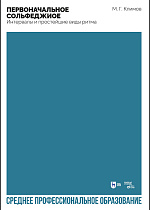
Михаил Георгиевич Климов (1881–1937) — хоровой дирижер, педагог, музыкально-общественный деятель. Данный сборник содержит упражнения по сольфеджио. В книге автор проработал интонации всех интервалов вне лада, что должно было способствовать развитию интервального слуха, необходимого для овладения техникой чтения нот с листа.
Изначально издание было предназначено для использования в классах Санкт-Петербургской консерватории и Придворной Певческой капеллы.
Соответствует современным требованиям Федерального государственного образовательного стандарта среднего профессионального образования и профессиональным квалификационным требованиям.
Сборник может использоваться учащимися и педагогами средних специальных музыкальных учебных заведений.
Mikhail Georgievich Klimov (1881–1937) was a choral conductor, educator, and music and public figure. This collection presents solfeggio exercises. In his book the author worked on the intonation of all intervals non-mode, which was intended to train an intervallic hearing, necessary for mastering the technique of sight-reading.
The publication was originally intended for use in classes at the St. Petersburg Conservatory and the Court Chapel.
Corresponds to the modern requirements of the Federal State Educational Standard of Secondary Vocational Education and professional qualification requirements.
The collection can be used by students and teachers at music colleges.
Изначально издание было предназначено для использования в классах Санкт-Петербургской консерватории и Придворной Певческой капеллы.
Соответствует современным требованиям Федерального государственного образовательного стандарта среднего профессионального образования и профессиональным квалификационным требованиям.
Сборник может использоваться учащимися и педагогами средних специальных музыкальных учебных заведений.
Mikhail Georgievich Klimov (1881–1937) was a choral conductor, educator, and music and public figure. This collection presents solfeggio exercises. In his book the author worked on the intonation of all intervals non-mode, which was intended to train an intervallic hearing, necessary for mastering the technique of sight-reading.
The publication was originally intended for use in classes at the St. Petersburg Conservatory and the Court Chapel.
Corresponds to the modern requirements of the Federal State Educational Standard of Secondary Vocational Education and professional qualification requirements.
The collection can be used by students and teachers at music colleges.
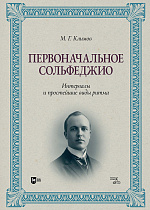
Михаил Георгиевич Климов (1881–1937) — хоровой дирижёр, педагог, музыкально-общественный деятель. Данный сборник содержит упражнения по сольфеджио. В книге автор проработал интонации всех интервалов вне лада, что должно было способствовать развитию интервального слуха, необходимого для овладения техникой чтения нот с листа.
Изначально издание было предназначено для использования в классах Санкт-Петербургской консерватории и Придворной Певческой капеллы.
Сборник может использоваться учащимися и педагогами музыкальных учебных заведений.
Mikhail Georgievich Klimov (1881–1937) was a choral conductor, educator, and music and public figure. This collection presents solfeggio exercises. In his book the author worked on the intonation of all intervals non-mode, which was intended to train an intervallic hearing, necessary for mastering the technique of sight-reading.
The publication was originally intended for use in classes at the St. Petersburg Conservatory and the Court Chapel.
The collection can be used by students and teachers at music schools.
Изначально издание было предназначено для использования в классах Санкт-Петербургской консерватории и Придворной Певческой капеллы.
Сборник может использоваться учащимися и педагогами музыкальных учебных заведений.
Mikhail Georgievich Klimov (1881–1937) was a choral conductor, educator, and music and public figure. This collection presents solfeggio exercises. In his book the author worked on the intonation of all intervals non-mode, which was intended to train an intervallic hearing, necessary for mastering the technique of sight-reading.
The publication was originally intended for use in classes at the St. Petersburg Conservatory and the Court Chapel.
The collection can be used by students and teachers at music schools.
Учебно-методическое пособие освещает теоретические вопросы фортепианных миниатюр С. В. Рахманинова. Даны основные положения методики, далее они рассматриваются на конкретных примерах: Итальянская полька ор. 21, Элегия ор. 3, Полишинель ор. 3, Прелюдия ор. 3. Соответствует современным требованиям Федерального государственного образовательного стандарта среднего профессионального образования и профессиональным квалификационным требованиям.
Работа будет полезна педагогам и студентам средних специальных учебных заведений.
This methodical textbook covers the theoretical aspects of piano miniatures by S. V. Rachmaninoff. The authors present basic principles of the method and then examine them using specific examples like Italian Polka Op. 21, Elegy Op. 3, Polichinelle Op. 3, Prelude Op. 3.
Corresponds to the modern requirements of the Federal State Educational Standard of Secondary Vocational Education and professional qualification requirements.
This work will be useful for teachers and students of colleges.
Работа будет полезна педагогам и студентам средних специальных учебных заведений.
This methodical textbook covers the theoretical aspects of piano miniatures by S. V. Rachmaninoff. The authors present basic principles of the method and then examine them using specific examples like Italian Polka Op. 21, Elegy Op. 3, Polichinelle Op. 3, Prelude Op. 3.
Corresponds to the modern requirements of the Federal State Educational Standard of Secondary Vocational Education and professional qualification requirements.
This work will be useful for teachers and students of colleges.
Учебно-методическое пособие посвящено изучению гармонии в классе фортепиано на примере этюдов Карла Черни с поэтапным ее освоением на протяжении всего периода обучения. В основной части рассмотрены основные темы на конкретных примерах из «Избранных фортепианных этюдов» (под ред. Г. Гермера) и «Школы беглости» ор. 299. Соответствует современным требованиям Федерального государственного образовательного стандарта среднего профессионального образования и профессиональным квалификационным требованиям. Работа будет полезна педагогам и студентам средних специальных учебных заведений.
The methodical textbook is devoted to the studying of harmony in a piano class, using the studies by Carl Czerny as examples, with a step-by-step approach to mastering harmony throughout the entire course of study. In the main section the authors examine the basic themes using specific examples from “Selected Piano Studies” (edited by H. Germer) and “The School of Velocity” op. 299. Corresponds to the modern requirements of the Federal State Educational Standard of Secondary Vocational Education and professional qualification requirements. The work will be useful for teachers and students of colleges.
The methodical textbook is devoted to the studying of harmony in a piano class, using the studies by Carl Czerny as examples, with a step-by-step approach to mastering harmony throughout the entire course of study. In the main section the authors examine the basic themes using specific examples from “Selected Piano Studies” (edited by H. Germer) and “The School of Velocity” op. 299. Corresponds to the modern requirements of the Federal State Educational Standard of Secondary Vocational Education and professional qualification requirements. The work will be useful for teachers and students of colleges.
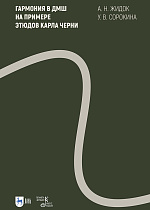
Учебно-методическое пособие посвящено изучению гармонии в классе фортепиано на примере этюдов Карла Черни с поэтапным ее освоением на протяжении всего периода обучения. В основной части рассмотрены основные темы на конкретных примерах из «Избранных фортепианных этюдов» (под ред. Г. Гермера) и «Школы беглости» ор. 299. Работа будет полезна педагогам по классу фортепиано в ДМШ (ДШИ), а также может быть использована в педагогических курсах средних специальных и высших учебных заведений.
The methodical textbook is devoted to the studying of harmony in a piano class, using the studies by Carl Czerny as examples, with a step-by-step approach to mastering harmony throughout the entire course of study. In the main section the authors examine the basic themes using specific examples from “Selected Piano Studies” (edited by H. Germer) and “The School of Velocity” op. 299. The work will be useful for piano teachers at children’s music schools (children’s schools of arts), and it can also be used at pedagogical courses at colleges and higher schools.
The methodical textbook is devoted to the studying of harmony in a piano class, using the studies by Carl Czerny as examples, with a step-by-step approach to mastering harmony throughout the entire course of study. In the main section the authors examine the basic themes using specific examples from “Selected Piano Studies” (edited by H. Germer) and “The School of Velocity” op. 299. The work will be useful for piano teachers at children’s music schools (children’s schools of arts), and it can also be used at pedagogical courses at colleges and higher schools.
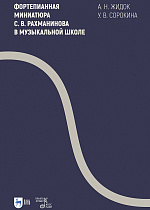
Учебно-методическое пособие освещает теоретические вопросы фортепианных миниатюр С. В. Рахманинова. Даны основные положения методики, далее они рассматриваются на конкретных примерах: Итальянская полька ор. 21, Элегия ор. 3, Полишинель ор. 3, Прелюдия ор. 3.
Работа будет полезна педагогам по классу фортепиано в ДМШ (ДШИ), а также может быть использована в педагогических курсах средних специальных и высших учебных заведений.
This methodical textbook covers the theoretical aspects of piano miniatures by S. V. Rachmaninoff. The authors present basic principles of the method and then examine them using specific examples like Italian Polka Op. 21, Elegy Op. 3, Poli-chinelle Op. 3, Prelude Op. 3.
This work will be useful for piano teachers at children’s music schools (children’s schools of arts), and can also be used in pedagogical courses at colleges and higher schools.
Работа будет полезна педагогам по классу фортепиано в ДМШ (ДШИ), а также может быть использована в педагогических курсах средних специальных и высших учебных заведений.
This methodical textbook covers the theoretical aspects of piano miniatures by S. V. Rachmaninoff. The authors present basic principles of the method and then examine them using specific examples like Italian Polka Op. 21, Elegy Op. 3, Poli-chinelle Op. 3, Prelude Op. 3.
This work will be useful for piano teachers at children’s music schools (children’s schools of arts), and can also be used in pedagogical courses at colleges and higher schools.
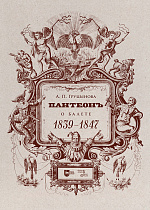
В книге впервые объединены материалы о балете и танце, публиковавшиеся на страницах журналов (от «Репертуара русского театра» до «Репертуара и Пантеона театров») в 1839–1847 годах. Эти журналы интересны историческими статьями и информационными сообщениями, которые рисуют панораму музыкально-театральной жизни России и мира середины XIX века.
Книга дополнена справочными списками многочисленных упомянутых имён и балетных постановок, в ней сохранены иллюстрации, относящиеся к конкретным статьям; основной текст снабжён необходимыми комментариями.
Издание будет интересно теоретикам музыкального театра (балетоведам, театроведам, культурологам), его практикам (исполнителям, педагогам, балетмейстерам) и всем любителям балетного искусства.
This book brings together for the first time materials on ballet and dance published in magazines (from “Repertoire of the Russian Theatre” to “Repertoire and Pantheon of Theatres”) from 1839 to 1847. These magazines are notable for their historical articles and news reports that give a view of musical and theatrical life in Russia and the world in the mid-19th century.
The book is supplemented with reference lists of numerous names and ballet stage productions mentioned, and it provides illustrations related to specific articles; the main text is provided with necessary comments.
This edition will be of interest to musical theatre scholars (ballet, theatre, and culture experts), practitioners (performers, teachers, and choreographers), and all lovers of ballet.
Книга дополнена справочными списками многочисленных упомянутых имён и балетных постановок, в ней сохранены иллюстрации, относящиеся к конкретным статьям; основной текст снабжён необходимыми комментариями.
Издание будет интересно теоретикам музыкального театра (балетоведам, театроведам, культурологам), его практикам (исполнителям, педагогам, балетмейстерам) и всем любителям балетного искусства.
This book brings together for the first time materials on ballet and dance published in magazines (from “Repertoire of the Russian Theatre” to “Repertoire and Pantheon of Theatres”) from 1839 to 1847. These magazines are notable for their historical articles and news reports that give a view of musical and theatrical life in Russia and the world in the mid-19th century.
The book is supplemented with reference lists of numerous names and ballet stage productions mentioned, and it provides illustrations related to specific articles; the main text is provided with necessary comments.
This edition will be of interest to musical theatre scholars (ballet, theatre, and culture experts), practitioners (performers, teachers, and choreographers), and all lovers of ballet.
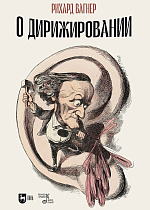
Выдающийся немецкий композитор, дирижер и один из крупнейших музыкальных реформаторов XIX века Рихард Вагнер находился у истоков современного дирижирования (наряду с Л. ван Бетховеном и Г. Берлиозом), был в числе первых, кто, управляя оркестром, повернулся спиной к публике.
Его работа «О дирижировании» вышла в свет в 1869 году и до сих пор является одним из важнейших теоретических сочинений XIX века. В глубоком, окрашенном полемическим оттенком тексте Вагнер изложил свое отношение к профессии дирижера, поставил ряд важных вопросов об обучении непростому ремеслу, доказал, что дирижирование — это искусство интерпретации, а «пульс» музыки не сводится к отсчитыванию долей.
Издание адресовано дирижерам, музыкантам, музыковедам, а также всем тем, кто интересуется историей музыки, личностью и творчеством Рихарда Вагнера.
Richard Wagner, an outstanding German composer, conductor and one of the greatest musical reformers of the 19th century, stood at the origins of a modern conducting (along with L. van Beethoven and H. Berlioz), and was among the first persons who turned his back on the audience while conducting an orchestra.
His work “On Conducting” (“Über das Dirigieren”) was published in 1869 and remains one of the most important theoretical treatises of the 19th century. In this profound, polemical essay, Wagner expressed his views on the conducter’s profession, raised a number of important questions about learning this complicated thing, and proved that conducting was an art of interpretation, and that the music “pulse” was not simply the counting of beat.
The edition is intended for conductors, musicians, musicologists, and anyone interested in the music history and the Richard Wagner’s personality and work.
Его работа «О дирижировании» вышла в свет в 1869 году и до сих пор является одним из важнейших теоретических сочинений XIX века. В глубоком, окрашенном полемическим оттенком тексте Вагнер изложил свое отношение к профессии дирижера, поставил ряд важных вопросов об обучении непростому ремеслу, доказал, что дирижирование — это искусство интерпретации, а «пульс» музыки не сводится к отсчитыванию долей.
Издание адресовано дирижерам, музыкантам, музыковедам, а также всем тем, кто интересуется историей музыки, личностью и творчеством Рихарда Вагнера.
Richard Wagner, an outstanding German composer, conductor and one of the greatest musical reformers of the 19th century, stood at the origins of a modern conducting (along with L. van Beethoven and H. Berlioz), and was among the first persons who turned his back on the audience while conducting an orchestra.
His work “On Conducting” (“Über das Dirigieren”) was published in 1869 and remains one of the most important theoretical treatises of the 19th century. In this profound, polemical essay, Wagner expressed his views on the conducter’s profession, raised a number of important questions about learning this complicated thing, and proved that conducting was an art of interpretation, and that the music “pulse” was not simply the counting of beat.
The edition is intended for conductors, musicians, musicologists, and anyone interested in the music history and the Richard Wagner’s personality and work.
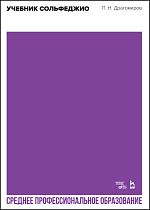
Драгомиров Павел Нилович (1880 - 1938) – хоровой дирижер, регент, композитор, педагог.
Составленный им «Учебник сольфеджио» – популярное учебное пособие, предназначенное для средних специальных учебных заведений и проверенное многолетней учебной практикой. Пособие предлагает упражнения на все виды гамм и интервалов, содержит 300 примеров музыкальных примеров сольфеджио, взятых из сочинений композиторов-классиков.
Издание предназначается для педагогов и студентов средних специальных учебных заведений.
Dragomirov Pavel Nilovich (1880–1938) was a choral conductor, church regent, composer and teacher. “Solfeggio textbook”, compiled by him, is a popular textbook, intended for secondary special educational institutions and successfully used during the long years of musical practice. The book offers exercises on all types of scales and leaps and сontains 300 examples of solfeggi, taken from the works of classical composers.
The textbook is intended for teachers and students of colleges.
Составленный им «Учебник сольфеджио» – популярное учебное пособие, предназначенное для средних специальных учебных заведений и проверенное многолетней учебной практикой. Пособие предлагает упражнения на все виды гамм и интервалов, содержит 300 примеров музыкальных примеров сольфеджио, взятых из сочинений композиторов-классиков.
Издание предназначается для педагогов и студентов средних специальных учебных заведений.
Dragomirov Pavel Nilovich (1880–1938) was a choral conductor, church regent, composer and teacher. “Solfeggio textbook”, compiled by him, is a popular textbook, intended for secondary special educational institutions and successfully used during the long years of musical practice. The book offers exercises on all types of scales and leaps and сontains 300 examples of solfeggi, taken from the works of classical composers.
The textbook is intended for teachers and students of colleges.
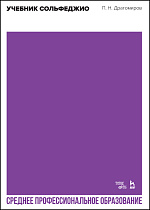
Драгомиров Павел Нилович (1880 - 1938) – хоровой дирижер, регент, композитор, педагог.
Составленный им «Учебник сольфеджио» – популярное учебное пособие, предназначенное для средних специальных учебных заведений и проверенное многолетней учебной практикой. Пособие предлагает упражнения на все виды гамм и интервалов, содержит 300 примеров музыкальных примеров сольфеджио, взятых из сочинений композиторов-классиков.
Издание предназначается для педагогов и студентов средних специальных учебных заведений.
Dragomirov Pavel Nilovich (1880–1938) was a choral conductor, church regent, composer and teacher. “Solfeggio textbook”, compiled by him, is a popular textbook, intended for secondary special educational institutions and successfully used during the long years of musical practice. The book offers exercises on all types of scales and leaps and сontains 300 examples of solfeggi, taken from the works of classical composers.
The textbook is intended for teachers and students of colleges.
Составленный им «Учебник сольфеджио» – популярное учебное пособие, предназначенное для средних специальных учебных заведений и проверенное многолетней учебной практикой. Пособие предлагает упражнения на все виды гамм и интервалов, содержит 300 примеров музыкальных примеров сольфеджио, взятых из сочинений композиторов-классиков.
Издание предназначается для педагогов и студентов средних специальных учебных заведений.
Dragomirov Pavel Nilovich (1880–1938) was a choral conductor, church regent, composer and teacher. “Solfeggio textbook”, compiled by him, is a popular textbook, intended for secondary special educational institutions and successfully used during the long years of musical practice. The book offers exercises on all types of scales and leaps and сontains 300 examples of solfeggi, taken from the works of classical composers.
The textbook is intended for teachers and students of colleges.
Закрыть
Сообщить о поступлении
Укажите ваш e-mail, и мы пришлем уведомление, как только книга
станет доступна для покупки.