

Искусство балетмейстера - все книги по дисциплине. Издательство Лань
Сохранить список:
Excel
Excel
Закрыть
Выгрузка списка книг доступна только авторизованным пользователям. Авторизоваться
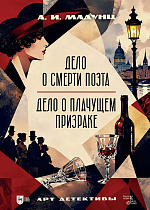
Мирное для России начало 1910-х, загадочные убийства, связанные с искусством, а расследование ведет любимец дам, харизматичный Александр Коцебу... Где взять машину времени, чтобы хоть ненадолго перенестись из нашей жизни в ту?
Исторические арт-детективы Александры Мадунц написаны настолько достоверно, что вы словно и впрямь побываете в Серебряном веке, причем, возможно, вычислите не только убийцу, но и прототипы некоторых героев.
В «Деле о смерти поэта» гибель члена поэтического кружка предсказана в анонимных стихотворных письмах, в «Деле о плачущем призраке» убийства провоцирует призрак умершей крепостной актрисы... Мистика или хитрый план вполне реального злодея?
The peaceful early 1910s in Russia, mysterious murders in the world of arts, and the investigation led by the ladies’ man, the charismatic Alexander Kotzebue... Where do we get a time machine to transport us, even if only briefly, from our time to life of the past?
The historical art detective stories by Alexandra Madunts are written so true-to-life, that you would really feel yourself back to the Silver Age, and perhaps guess both the killer and the prototypes of some characters.
In “The Case of the Poet’s Death” the death of a member of a poetry club is predicted in anonymous letters of verse; in “The Case of the Weeping Ghost” the murder is provoked by the ghost of a deceased serf actress... Mysticism or the cunning plan of a real villain?
Исторические арт-детективы Александры Мадунц написаны настолько достоверно, что вы словно и впрямь побываете в Серебряном веке, причем, возможно, вычислите не только убийцу, но и прототипы некоторых героев.
В «Деле о смерти поэта» гибель члена поэтического кружка предсказана в анонимных стихотворных письмах, в «Деле о плачущем призраке» убийства провоцирует призрак умершей крепостной актрисы... Мистика или хитрый план вполне реального злодея?
The peaceful early 1910s in Russia, mysterious murders in the world of arts, and the investigation led by the ladies’ man, the charismatic Alexander Kotzebue... Where do we get a time machine to transport us, even if only briefly, from our time to life of the past?
The historical art detective stories by Alexandra Madunts are written so true-to-life, that you would really feel yourself back to the Silver Age, and perhaps guess both the killer and the prototypes of some characters.
In “The Case of the Poet’s Death” the death of a member of a poetry club is predicted in anonymous letters of verse; in “The Case of the Weeping Ghost” the murder is provoked by the ghost of a deceased serf actress... Mysticism or the cunning plan of a real villain?
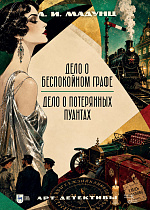
Мирное для России начало 1910-х, загадочные убийства, связанные с искусством, а расследование ведет любимец дам, харизматичный Александр Коцебу... Где взять машину времени, чтобы хоть ненадолго перенестись из нашей жизни в ту?
Исторические арт-детективы Александры Мадунц написаны настолько достоверно, что вы словно и впрямь побываете в Серебряном веке, причем, возможно, вычислите не только убийцу, но и прототипы некоторых героев.
В «Деле о беспокойном графе» самый беспокойный граф русской литературы Лев Толстой сбежал из дома, а вокруг собрались самые разные люди: романтический юноша, избалованная богатая наследница, красавец-князь, анархисты из тайного общества. Немудрено, что происходит убийство. И как же оно для всех некстати!
В «Деле о потерянных пуантах», как легко догадаться, преступления совершаются в балетной среде. Не так уж сильно она изменилась, и некоторые события вполне могли случиться в веке нынешнем. Кто устраивает покушения на восходящую звезду?
The peaceful early 1910s in Russia, mysterious murders in the world of arts, and the investigation led by the ladies’ man, the charismatic Alexander Kotzebue... Where do we get a time machine to transport us, even if only briefly, from our time to life of the past?
The historical art detective stories by Alexandra Madunts are written so true-to-life, that you would really feel yourself back to the Silver Age, and perhaps guess both the killer and the prototypes of some characters.
In “The Case of the Restless Count” Leo Tolstoy, the most restless count in Russian literature, has fled home, and a group of different persons have gathered around him: a romantic young man, a whimsical rich heiress, a handsome prince, and anarchists from a secret society. It’s no wonder a murder occurs. And how inconveniently for everyone!
In “The Case of the Lost Pointe Shoes”, as you might guess, the crimes are committed within the ballet world. It hasn’t changed all that much since then, and some of the events could easily have happened in the current century. Who is orchestrating the assassination attempts on the rising star?
Исторические арт-детективы Александры Мадунц написаны настолько достоверно, что вы словно и впрямь побываете в Серебряном веке, причем, возможно, вычислите не только убийцу, но и прототипы некоторых героев.
В «Деле о беспокойном графе» самый беспокойный граф русской литературы Лев Толстой сбежал из дома, а вокруг собрались самые разные люди: романтический юноша, избалованная богатая наследница, красавец-князь, анархисты из тайного общества. Немудрено, что происходит убийство. И как же оно для всех некстати!
В «Деле о потерянных пуантах», как легко догадаться, преступления совершаются в балетной среде. Не так уж сильно она изменилась, и некоторые события вполне могли случиться в веке нынешнем. Кто устраивает покушения на восходящую звезду?
The peaceful early 1910s in Russia, mysterious murders in the world of arts, and the investigation led by the ladies’ man, the charismatic Alexander Kotzebue... Where do we get a time machine to transport us, even if only briefly, from our time to life of the past?
The historical art detective stories by Alexandra Madunts are written so true-to-life, that you would really feel yourself back to the Silver Age, and perhaps guess both the killer and the prototypes of some characters.
In “The Case of the Restless Count” Leo Tolstoy, the most restless count in Russian literature, has fled home, and a group of different persons have gathered around him: a romantic young man, a whimsical rich heiress, a handsome prince, and anarchists from a secret society. It’s no wonder a murder occurs. And how inconveniently for everyone!
In “The Case of the Lost Pointe Shoes”, as you might guess, the crimes are committed within the ballet world. It hasn’t changed all that much since then, and some of the events could easily have happened in the current century. Who is orchestrating the assassination attempts on the rising star?
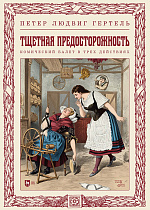
Впервые читателям предлагается издание балета Петера Людвига Гертеля «Тщетная предосторожность» (1864). Этот балет считается одной из самых старых репертуарных постановок, до сих пор сохраняющихся на сцене, а музыка Гертеля к нему хорошо известна в отечественной театральной традиции. Балет представлен в редакции Мариуса Петипа и Льва Иванова (1885).
Под одну обложку издания помещен сам клавир и необходимые сопутствующие нотные, научные и исторические материалы: нотный текст номеров, поначалу бывших вставными, а теперь являющихся неотъемлемой частью балета, либретто «Тщетной предосторожности» 1891 и 1979 годов, исполнительское описание партии Лизы, в свое время сделанное Е. Соколовой, и описание действия балета, принадлежащее Н. Сергееву, в также краткая биографическая справка о Гертеле и статья, посвященная балету.
Издание будет полезно хореографам, педагогам и учащимся хореографических учебных заведений, концертмейстерам балета, балетоведам, культуроведам, музыковедам, изучающим историю балета и балетной музыки, а также всем любителям балетного театра.
This is the first edition of a ballet piano score La Fille mal gardée (1864) by Peter Ludwig Hertel. This ballet is considered to be one of the oldest repertory productions still performed, and Hertel’s music is well known in the Russian theatrical tradition. The ballet is presented in the version by Marius Petipa and Lev Ivanov (1885).
The edition contains the piano score itself and additional music, scholarly and historical materials: the score of the ballet numbers, initially inserted but now integral to the ballet, the librettos of La Fille mal gardée from 1891 and 1979, the performance description of the role of Lise, originally written by E. Sokolova, and the description of the ballet’s plot by N. Sergeyev, as well as a brief biographical note on Hertel and an article devoted to the ballet.
The edition will be useful to choreographers, teachers and students of choreographic schools, ballet accompanists, ballet experts, culture experts and musicologists studying the ballet history and ballet music history, as well as all admirers of ballet theatre.
Под одну обложку издания помещен сам клавир и необходимые сопутствующие нотные, научные и исторические материалы: нотный текст номеров, поначалу бывших вставными, а теперь являющихся неотъемлемой частью балета, либретто «Тщетной предосторожности» 1891 и 1979 годов, исполнительское описание партии Лизы, в свое время сделанное Е. Соколовой, и описание действия балета, принадлежащее Н. Сергееву, в также краткая биографическая справка о Гертеле и статья, посвященная балету.
Издание будет полезно хореографам, педагогам и учащимся хореографических учебных заведений, концертмейстерам балета, балетоведам, культуроведам, музыковедам, изучающим историю балета и балетной музыки, а также всем любителям балетного театра.
This is the first edition of a ballet piano score La Fille mal gardée (1864) by Peter Ludwig Hertel. This ballet is considered to be one of the oldest repertory productions still performed, and Hertel’s music is well known in the Russian theatrical tradition. The ballet is presented in the version by Marius Petipa and Lev Ivanov (1885).
The edition contains the piano score itself and additional music, scholarly and historical materials: the score of the ballet numbers, initially inserted but now integral to the ballet, the librettos of La Fille mal gardée from 1891 and 1979, the performance description of the role of Lise, originally written by E. Sokolova, and the description of the ballet’s plot by N. Sergeyev, as well as a brief biographical note on Hertel and an article devoted to the ballet.
The edition will be useful to choreographers, teachers and students of choreographic schools, ballet accompanists, ballet experts, culture experts and musicologists studying the ballet history and ballet music history, as well as all admirers of ballet theatre.
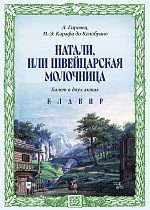
Читателям впервые предлагается издание клавира балета Адальберта Гировеца и Микеле Карафа ди Колобрано «Натали, или Швейцарская молочница». Балет, который в XIX веке существовал в нескольких версиях в западноевропейских театрах, был дважды поставлен в России, а в XX веке возвратился на сцену благодаря Пьеру Лакотту, который возродил его для Екатерины Максимовой. Публикуемый клавир — редкая возможность познакомиться с музыкой этого балета.
Клавир дополнен вариантами либретто балета, относящимися к его разным постановкам, критическими отзывами, которые были опубликованы в XIX веке, а также научными статьями, посвящёнными как самому балету, так и композиторам — его авторам.
Издание будет полезно хореографам и балетмейстерам-реставраторам, концертмейстерам балета, педагогам и учащимся хореографических учебных заведений, балетоведам, культуроведам, музыковедам, изучающим историю балета и балетной музыки, а также всем любителям балетного театра.
This is the first edition of a piano score of Nathalie, ou La Laitière suisse (Natalie, or the Swiss Milkmaid), the ballet by Adalbert Gyrowetz and Michele Caraffa di Colobrano. It’s the ballet, which existed in several versions in Western European theatres of the 19th century, was staged twice in Russia, and was returned to the stage in the 20th century by Pierre Lacotte, who restored it for Ekaterina Maximova. The current edition representing the piano reduction offers a rare opportunity to become acquainted with the music of this ballet.
The piano score is supplemented with versions of the ballet’s libretto, relating to its various stage productions, critical reviews that were published in the 19th century, as well as scholarly articles dedicated to both the ballet itself and the composers who created it.
The edition will be useful to choreographers and ballet restorers, ballet accompanists, teachers and students of choreographic schools, ballet experts, culture experts and musicologists studying the ballet history and ballet music history, as well as all admirers of ballet theatre.
Клавир дополнен вариантами либретто балета, относящимися к его разным постановкам, критическими отзывами, которые были опубликованы в XIX веке, а также научными статьями, посвящёнными как самому балету, так и композиторам — его авторам.
Издание будет полезно хореографам и балетмейстерам-реставраторам, концертмейстерам балета, педагогам и учащимся хореографических учебных заведений, балетоведам, культуроведам, музыковедам, изучающим историю балета и балетной музыки, а также всем любителям балетного театра.
This is the first edition of a piano score of Nathalie, ou La Laitière suisse (Natalie, or the Swiss Milkmaid), the ballet by Adalbert Gyrowetz and Michele Caraffa di Colobrano. It’s the ballet, which existed in several versions in Western European theatres of the 19th century, was staged twice in Russia, and was returned to the stage in the 20th century by Pierre Lacotte, who restored it for Ekaterina Maximova. The current edition representing the piano reduction offers a rare opportunity to become acquainted with the music of this ballet.
The piano score is supplemented with versions of the ballet’s libretto, relating to its various stage productions, critical reviews that were published in the 19th century, as well as scholarly articles dedicated to both the ballet itself and the composers who created it.
The edition will be useful to choreographers and ballet restorers, ballet accompanists, teachers and students of choreographic schools, ballet experts, culture experts and musicologists studying the ballet history and ballet music history, as well as all admirers of ballet theatre.
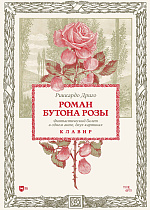
Впервые предлагается издание клавира балета Риккардо Дриго «Роман Бутона розы». Балет в 1904 году готовился Мариусом Петипа для постановки в Эрмитажном театре, но так и не был показан зрителям, и современная публикация фортепианного переложения, сделанного самим композитором – редчайшая возможность познакомиться с музыкой неосуществленного спектакля.
Клавир дополнен текстом либретто, сочиненным Иваном Александровичем Всеволожским и Мариусом Петипа, а также научными статьями, посвященными жизни и творчеству Дриго, истории создания балета и особенностям его музыкальной драматургии.
Издание будет полезно хореографам и балетмейстерам-реставраторам, концертмейстерам балета, педагогам и учащимся хореографических учебных заведений, балетоведам, культуроведам и музыковедам, изучающим историю балета и балетной музыки, а также всем любителям балетного театра.
This is the first edition of a piano score of The Romance of a Rosebud, the ballet by Riccardo Drigo. The ballet was choreographed by Marius Petipa in 1904 for production at the Hermitage Theatre, but was never shown to the audience, and the current publication of the piano transcription made by the composer himself is a rare opportunity to get acquainted with the music of a lost performance.
The piano score is supplemented with the libretto written by Ivan Aleksandrovich Vsevolozhsky and Marius Petipa, as well as the researches’ articles devoted to the life and work of Drigo, the history of the ballet creation the features of its music dramaturgy.
The edition will be useful to choreographers and ballet restorers, ballet accompanists, teachers and students of choreographic schools, ballet experts, culture experts and musicologists studying the ballet history and ballet music history, as well as all admirers of ballet theatre.
Клавир дополнен текстом либретто, сочиненным Иваном Александровичем Всеволожским и Мариусом Петипа, а также научными статьями, посвященными жизни и творчеству Дриго, истории создания балета и особенностям его музыкальной драматургии.
Издание будет полезно хореографам и балетмейстерам-реставраторам, концертмейстерам балета, педагогам и учащимся хореографических учебных заведений, балетоведам, культуроведам и музыковедам, изучающим историю балета и балетной музыки, а также всем любителям балетного театра.
This is the first edition of a piano score of The Romance of a Rosebud, the ballet by Riccardo Drigo. The ballet was choreographed by Marius Petipa in 1904 for production at the Hermitage Theatre, but was never shown to the audience, and the current publication of the piano transcription made by the composer himself is a rare opportunity to get acquainted with the music of a lost performance.
The piano score is supplemented with the libretto written by Ivan Aleksandrovich Vsevolozhsky and Marius Petipa, as well as the researches’ articles devoted to the life and work of Drigo, the history of the ballet creation the features of its music dramaturgy.
The edition will be useful to choreographers and ballet restorers, ballet accompanists, teachers and students of choreographic schools, ballet experts, culture experts and musicologists studying the ballet history and ballet music history, as well as all admirers of ballet theatre.
Настоящее издание является результатом многолетней балетмейстерской и педагогической деятельности автора в Государственном ансамбле танца "Марий Эл", Государственном ансамбле танца Беларуси, Российском театре национального танца, Московском Государственном институте культуры, Академии танца Университета Натальи Нестеровой, Смоленском Государственном институте искусств, а также большой исследовательской работы в области народной хореографии.
Книга «Искусство балетмейстера» предназначена для педагогов и студентов хореографических специальностей высших учебных заведений. Может быть полезной в хореографических училищах, колледжах культуры и искусств, школах искусств, а также в среде балетмейстеров-практиков – любителей и профессионалов.
This current edition is the result of the author’s many years of experience as a choreographer and educator in the State Dance Ensemble “Mari El”, the State Dance Ensemble of Belarus, the Russian National Dance Theater, the Moscow State Institute of Culture, the Academy of Dance of Natalia Nesterova University, the Smolensk State Institute of Arts, as well as extensive research work in the sphere of a folk choreography.
The book “The Art of a Choreographer” is intended for teachers and students specializing in choreography in higher schools. It may be useful in choreographic colleges, colleges
of culture and arts, schools of arts, as well as among practicing choreographers, both amateurs and professionals.
Книга «Искусство балетмейстера» предназначена для педагогов и студентов хореографических специальностей высших учебных заведений. Может быть полезной в хореографических училищах, колледжах культуры и искусств, школах искусств, а также в среде балетмейстеров-практиков – любителей и профессионалов.
This current edition is the result of the author’s many years of experience as a choreographer and educator in the State Dance Ensemble “Mari El”, the State Dance Ensemble of Belarus, the Russian National Dance Theater, the Moscow State Institute of Culture, the Academy of Dance of Natalia Nesterova University, the Smolensk State Institute of Arts, as well as extensive research work in the sphere of a folk choreography.
The book “The Art of a Choreographer” is intended for teachers and students specializing in choreography in higher schools. It may be useful in choreographic colleges, colleges
of culture and arts, schools of arts, as well as among practicing choreographers, both amateurs and professionals.
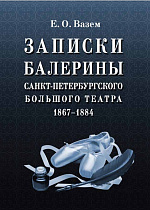
Е. О. Вазем, одна из немногих русских балерин XIX столетия, оставивших мемуары, по которым можно представить развитие дореволюционного балетного искусства в России, его успехи и поражения.
«Записки» Е. О. Вазем — ценный материал по истории петербургского балета. Особое значение имеют переданные на страницах книги характеристики многочисленных артистов и балетмейстеров, оценка их творчества, обзор русской критики конца XIX столетия, а также заметки о балетной публике и театральных чиновниках.
Воспоминания содержат ряд существенных сведений и о самой Вазем, и о жизни учащихся императорского театрального училища в Петербурге 50–60-х гг. XIX в.
«Записки» Е. О. Вазем — ценный материал по истории петербургского балета. Особое значение имеют переданные на страницах книги характеристики многочисленных артистов и балетмейстеров, оценка их творчества, обзор русской критики конца XIX столетия, а также заметки о балетной публике и театральных чиновниках.
Воспоминания содержат ряд существенных сведений и о самой Вазем, и о жизни учащихся императорского театрального училища в Петербурге 50–60-х гг. XIX в.
Книга «Классический танец. Школа мужского исполнительства» — переиздание труда Н. И. Тарасова, одного из корифеев педагогики в области балета. Это руководство для тех, кто занят обучением танцевальному искусству, охватывает все стороны педагогического процесса: основы классического танца, его цели и задачи, планирование работы педагога и учет успеваемости, эстетическое воспитание учеников, подбор музыкального материала для уроков. Работавший в годы советской власти, автор часто обращается к опыту советского балета, и издатели оставили текст без изменений из уважения к искусству, получившему всемирное признание.
Большая часть учебного пособия посвящена методике обучения танцу — позам, танцевальным движениям, прыжкам, поворотам в той последовательности и в тех сочетаниях, которые проверены опытом и обеспечивают усвоение всех, даже самых сложных движений классического танца.
Учебник предназначен педагогам и студентам средних специальных учебных заведений.
“Classical dance. Technique for the Male Dancer” is a re-edition of the work written by N. I. Tarasov, the coryphaeus of ballet pedagogy. The textbook provides recommendations for those learning dance art about all parts of pedagogical process: the basics of classical dance, its goals and objectives, planning of pedagogical work, record of academic achievements, aesthetic education of students, and selection of music material for lessons. The author, worked in the Soviet Union, often refers to the Soviet Ballet; publishers left this material with respect to internationally recognized art.
The textbook is designed to teachers and students of colleges.
The main body of the textbook is given over to dance teaching method — poses, movements, bounces, and twirls are presented sequentially, that helps to learn all, even difficult, dance steps.
Большая часть учебного пособия посвящена методике обучения танцу — позам, танцевальным движениям, прыжкам, поворотам в той последовательности и в тех сочетаниях, которые проверены опытом и обеспечивают усвоение всех, даже самых сложных движений классического танца.
Учебник предназначен педагогам и студентам средних специальных учебных заведений.
“Classical dance. Technique for the Male Dancer” is a re-edition of the work written by N. I. Tarasov, the coryphaeus of ballet pedagogy. The textbook provides recommendations for those learning dance art about all parts of pedagogical process: the basics of classical dance, its goals and objectives, planning of pedagogical work, record of academic achievements, aesthetic education of students, and selection of music material for lessons. The author, worked in the Soviet Union, often refers to the Soviet Ballet; publishers left this material with respect to internationally recognized art.
The textbook is designed to teachers and students of colleges.
The main body of the textbook is given over to dance teaching method — poses, movements, bounces, and twirls are presented sequentially, that helps to learn all, even difficult, dance steps.
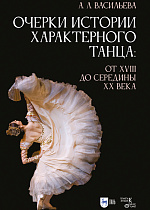
Характерный танец является неотъемлемой частью классического балета. В книге рассказывается об истоках и истории характерного танца, о формировании характерного танца как самостоятельного жанра, исследуется его место и роль в балетном спектакле.
Издание адресовано студентам хореографических и театральных учебных заведений, а также всем интересующимся историей балета.
Character dance is an integral part of classical ballet. The book tells about the origins and history of character dance, about the formation of character dance as an independent genre, studies its place and role in ballet performance.
The edition is addressed to students of choreographic and theater schools, as well as anyone interested in the ballet history.
Издание адресовано студентам хореографических и театральных учебных заведений, а также всем интересующимся историей балета.
Character dance is an integral part of classical ballet. The book tells about the origins and history of character dance, about the formation of character dance as an independent genre, studies its place and role in ballet performance.
The edition is addressed to students of choreographic and theater schools, as well as anyone interested in the ballet history.
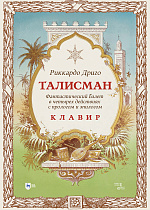
Читателям впервые предлагается издание клавира балета Риккардо Дриго «Талисман». Единственный в творчестве композитора «большой балет» на фантастический сюжет в четырех действиях с прологом и эпилогом, он был поставлен впервые в 1889 году М. Петипа, а затем — в 1909 году Н. Легат представил на сцене новую редакцию. Публикация фортепианного переложения, сделанного самим композитором, даёт уникальную возможность познакомиться с музыкой этого спектакля.
Клавир дополнен текстом либретто К. Тарновского — М. Петипа, а также научными статьями, посвященными жизни и творчеству Р. Дриго, истории создания балета и особенностям его музыкальной драматургии.
Издание будет полезно хореографам и балетмейстерам-реставраторам, концертмейстерам балета, педагогам и учащимся хореографических учебных заведений, балетоведам, культуроведам и музыковедам, изучающим историю балета и балетной музыки, а также всем любителям балетного театра.
This is the first edition of a piano score of The Talisman, the ballet by Riccardo Drigo. The composer’s only “grand ballet” on a fantastic plot in four acts with a prologue and epilogue, it was staged in 1889 by M. Petipa, and then in 1909 by N. Legat who presented a new stage version. The publication of the piano reduction made by the composer himself gives a unique opportunity to get acquainted with the music of this performance.
The piano score is supplemented with the libretto by K. Tarnovsky — M. Petipa, as well as the researches’ articles devoted to the life and work of Drigo, the history of the ballet creation and the features of its music dramaturgy.
The edition will be useful to choreographers and ballet restorers, ballet accompanists, teachers and students of choreographic schools, ballet experts, culture experts and musicologists studying the ballet history and ballet music history, as well as all admirers of ballet theatre.
Клавир дополнен текстом либретто К. Тарновского — М. Петипа, а также научными статьями, посвященными жизни и творчеству Р. Дриго, истории создания балета и особенностям его музыкальной драматургии.
Издание будет полезно хореографам и балетмейстерам-реставраторам, концертмейстерам балета, педагогам и учащимся хореографических учебных заведений, балетоведам, культуроведам и музыковедам, изучающим историю балета и балетной музыки, а также всем любителям балетного театра.
This is the first edition of a piano score of The Talisman, the ballet by Riccardo Drigo. The composer’s only “grand ballet” on a fantastic plot in four acts with a prologue and epilogue, it was staged in 1889 by M. Petipa, and then in 1909 by N. Legat who presented a new stage version. The publication of the piano reduction made by the composer himself gives a unique opportunity to get acquainted with the music of this performance.
The piano score is supplemented with the libretto by K. Tarnovsky — M. Petipa, as well as the researches’ articles devoted to the life and work of Drigo, the history of the ballet creation and the features of its music dramaturgy.
The edition will be useful to choreographers and ballet restorers, ballet accompanists, teachers and students of choreographic schools, ballet experts, culture experts and musicologists studying the ballet history and ballet music history, as well as all admirers of ballet theatre.
Закрыть
Сообщить о поступлении
Укажите ваш e-mail, и мы пришлем уведомление, как только книга
станет доступна для покупки.